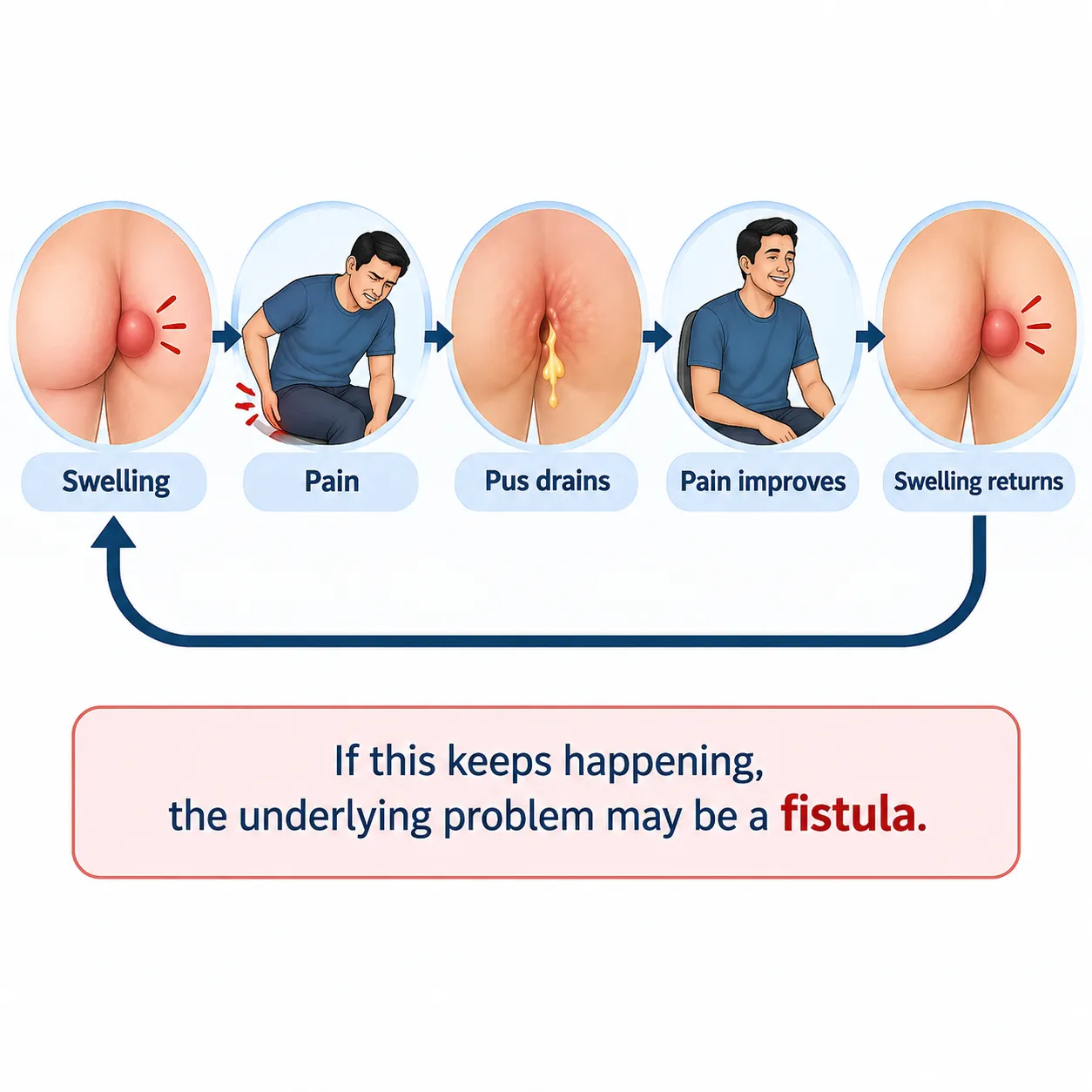
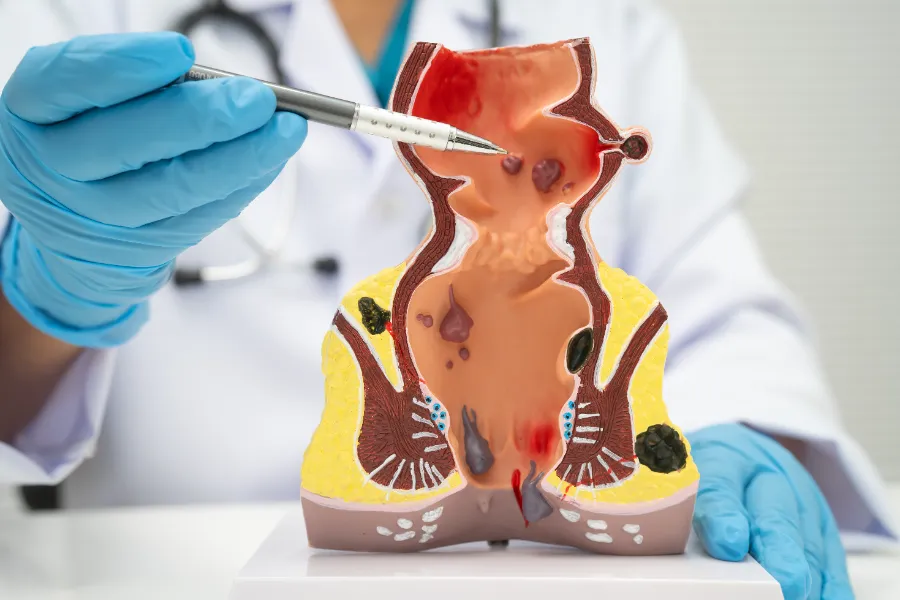
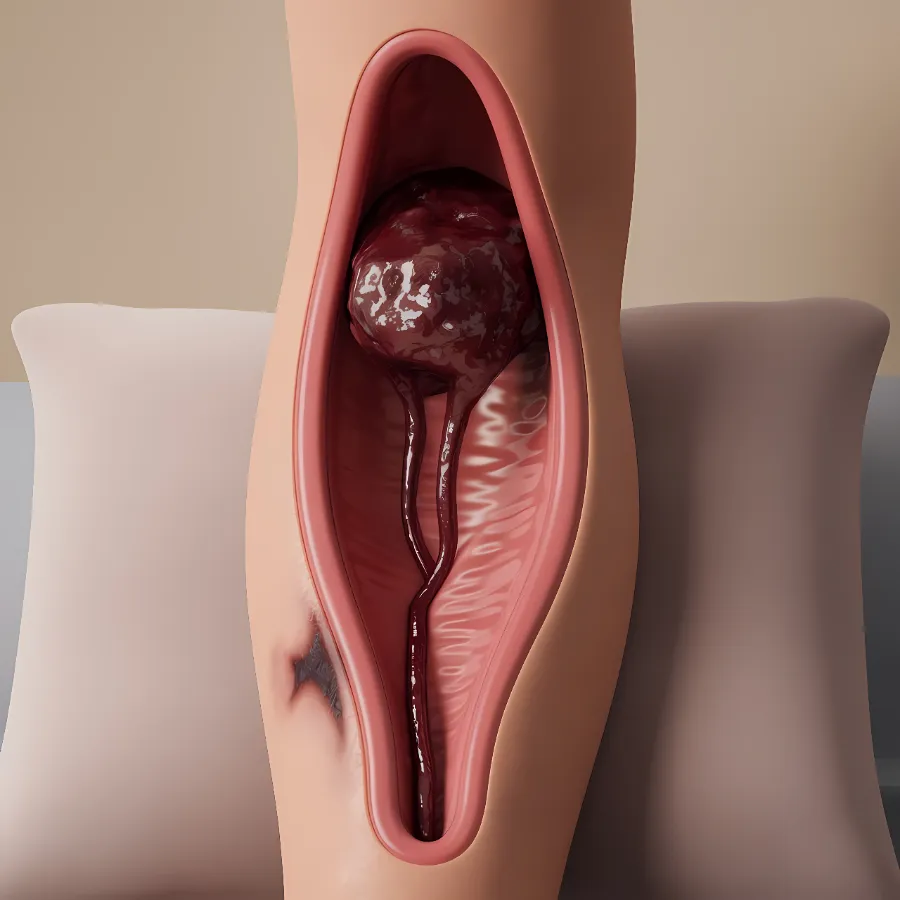
An anal fistula is a small tunnel that forms between the inside of the anus and the skin near the anus.
Most anal fistulas start with an anal abscess — a pocket of pus caused by infection. When the abscess drains but the tunnel does not heal, a fistula can remain.
The problem is usually not just the skin opening. The real issue is the tunnel underneath.
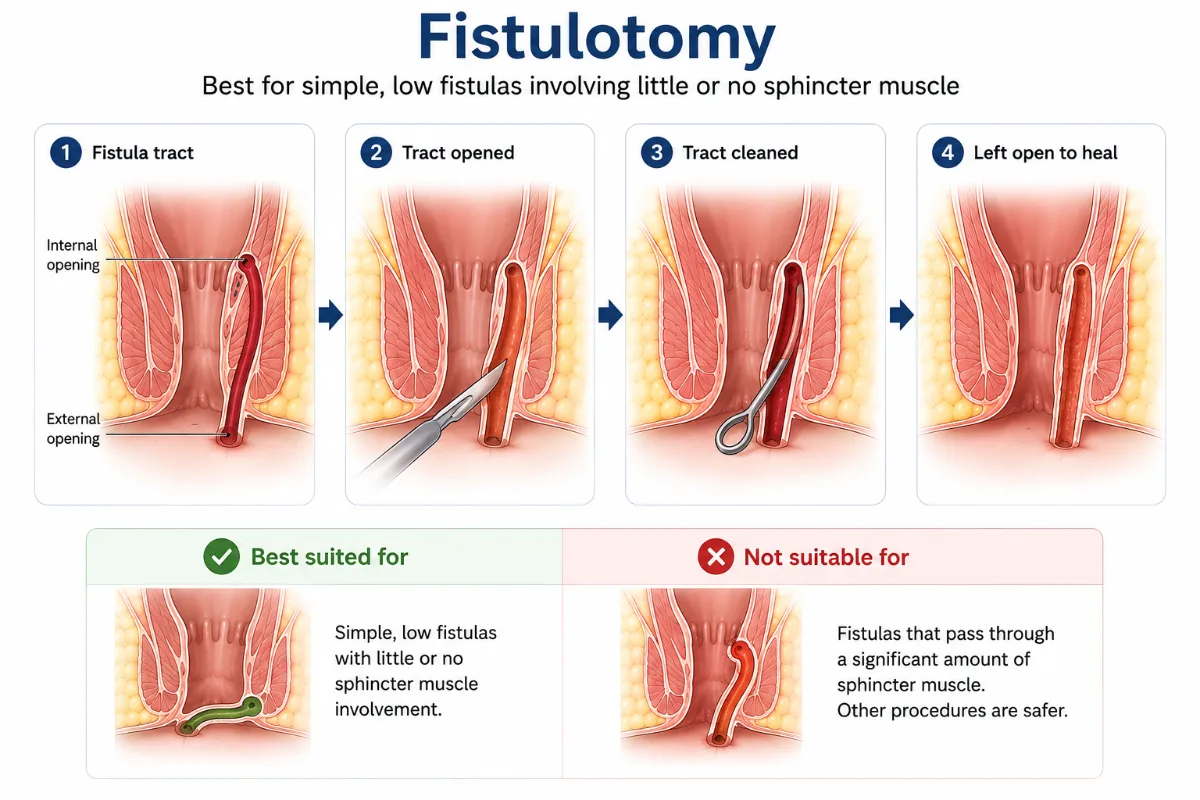
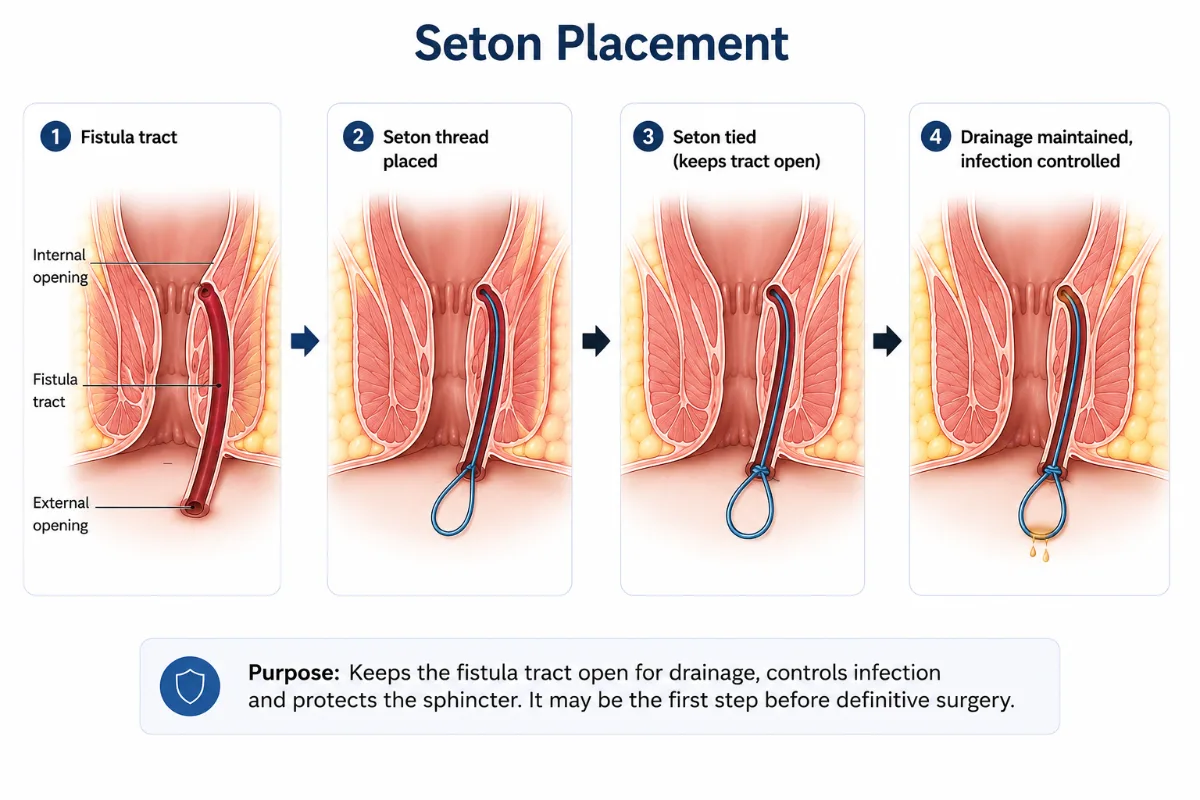
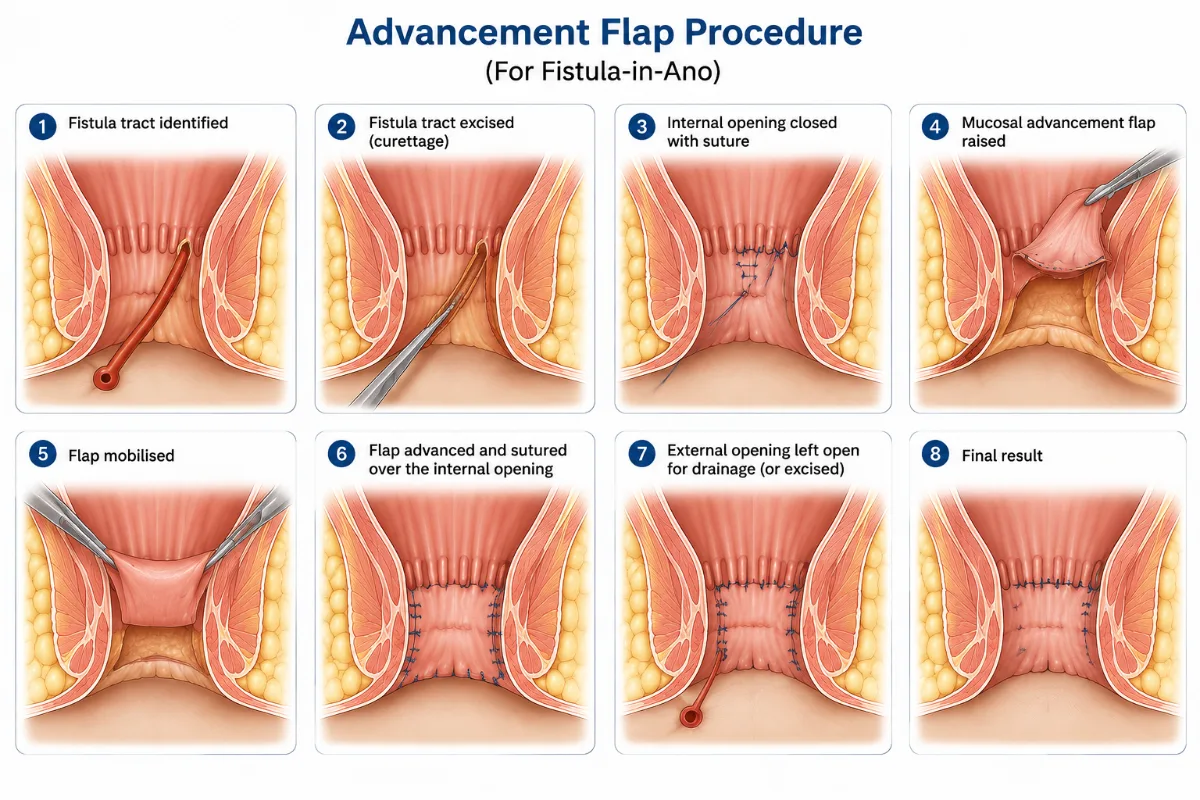
There is no single best treatment for every fistula. A simple low fistula may be treated with fistulotomy, while a fistula involving more sphincter muscle may need LIFT, a seton, advancement flap or another sphincter-preserving procedure.
Some pain or discomfort is normal after surgery. The amount depends on the procedure. Minimally invasive techniques generally involve less tissue cutting, but no procedure should be described as completely painless.
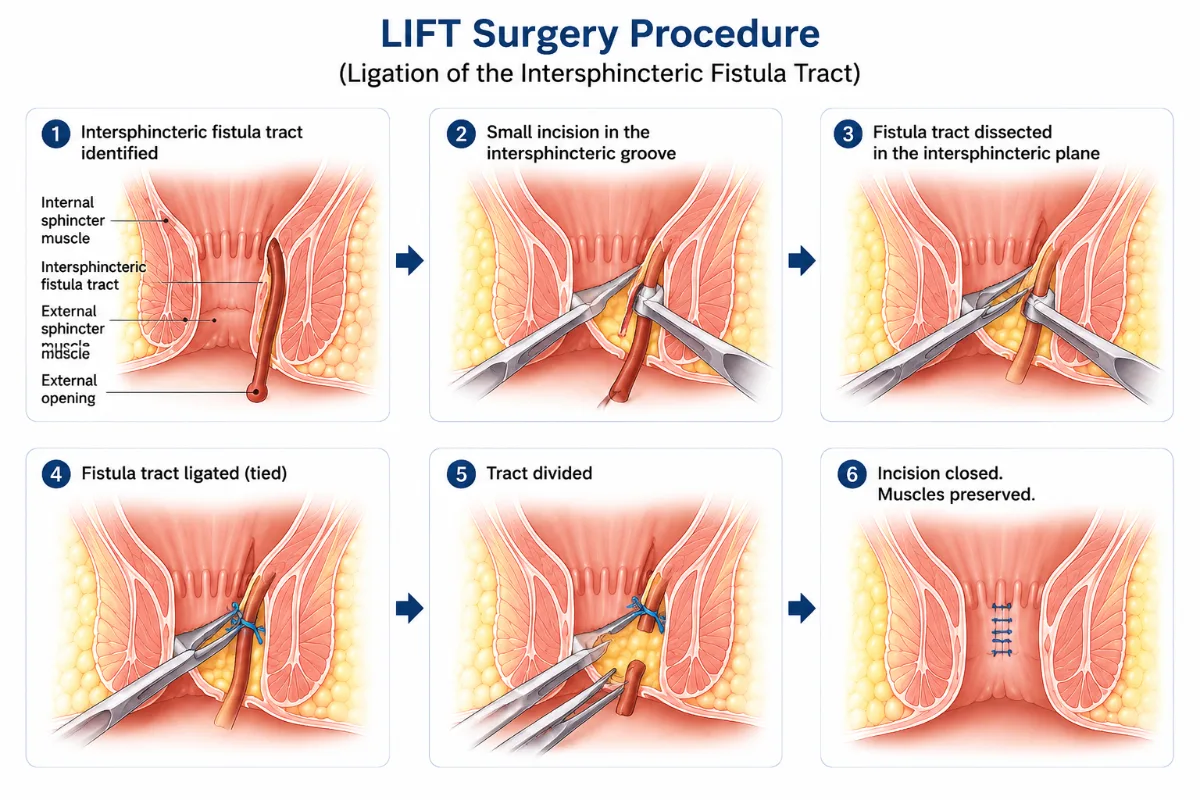
LIFT is a sphincter-preserving operation. The surgeon reaches the fistula in the space between the sphincter muscles, ties off the tract and separates it from the anal canal. It is commonly considered for transsphincteric fistulas.
Not everyone needs an MRI. It is particularly useful when the fistula is complex, recurrent or difficult to map during examination.
Some fistula operations can affect bowel control if they divide too much sphincter muscle. The risk depends on the fistula and the procedure. Sphincter-preserving procedures are designed to reduce this risk.
The time depends on the type of fistula and procedure. A simple fistulotomy differs from a complex VAAFT, LIFT, or flap procedure.
Most persistent anal fistulas do not heal on their own and usually need treatment.
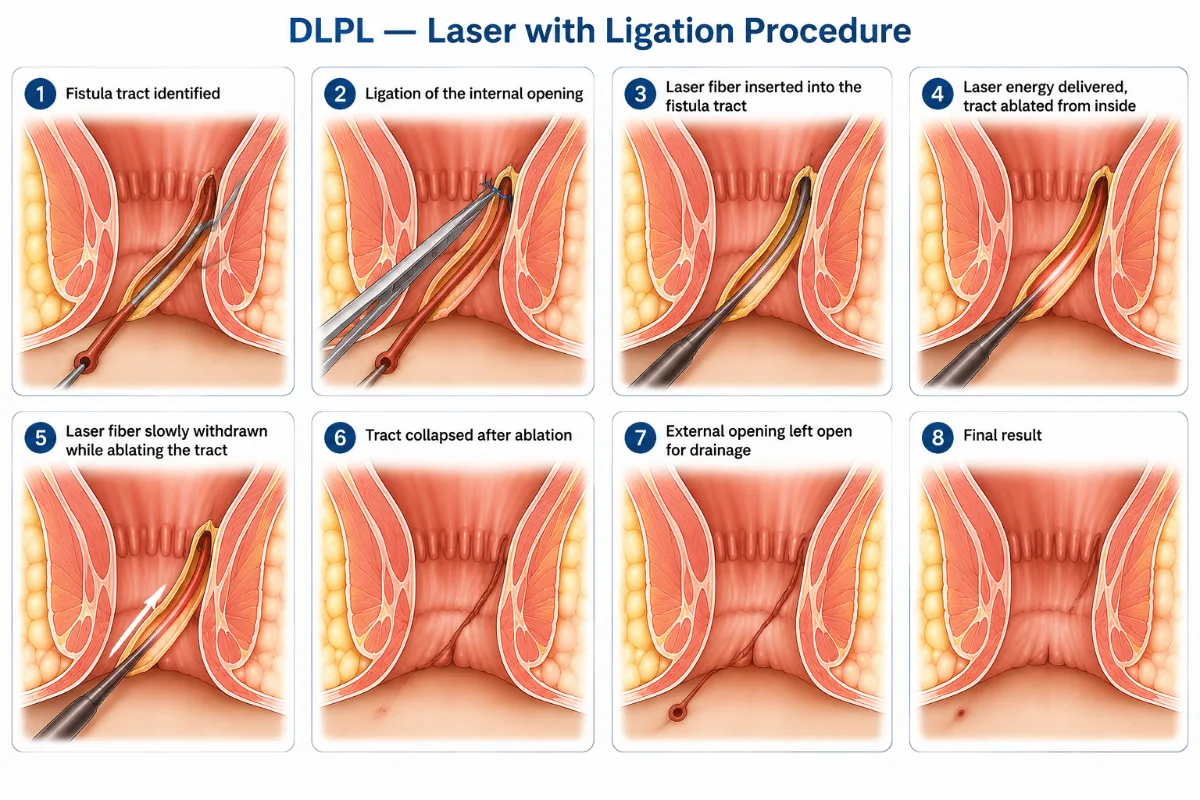
Not necessarily. Laser can be useful for selected fistulas and preserves the sphincter. Fistulotomy remains one of the most effective treatments for suitable low fistulas. The correct choice depends on the fistula’s anatomy.
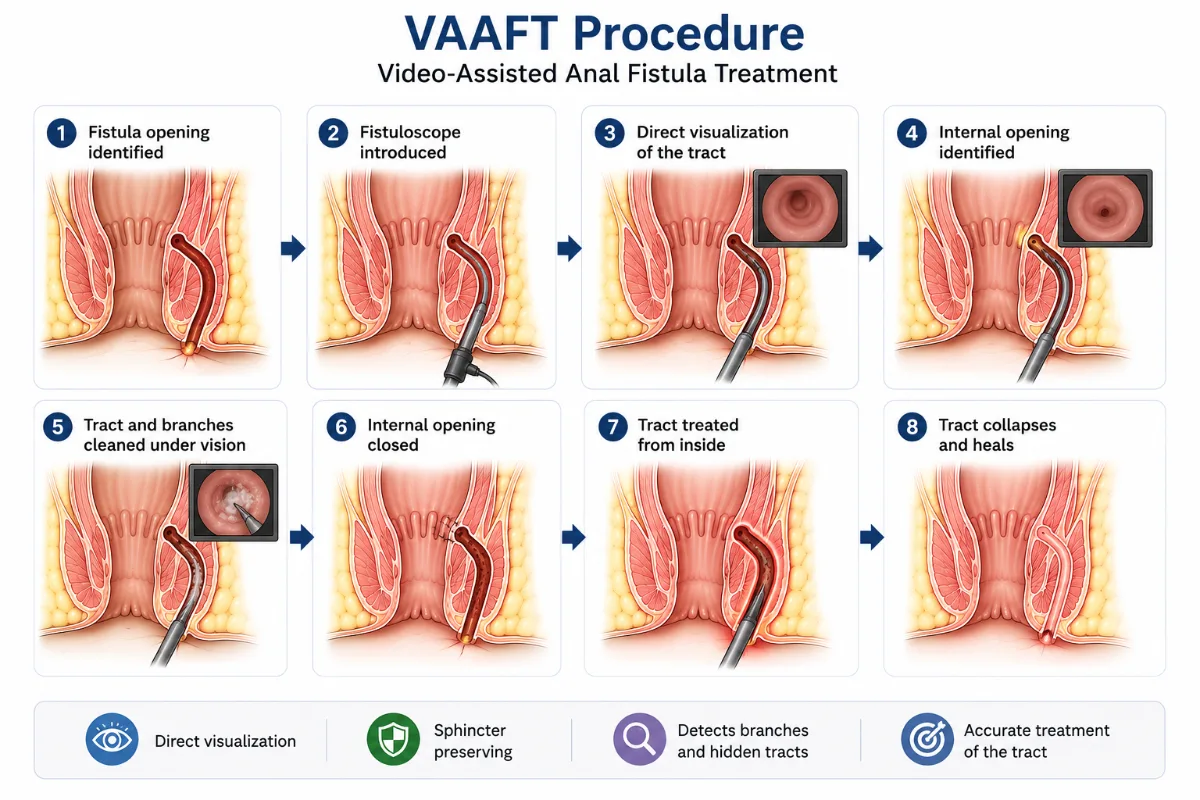
VAAFT uses a small camera to look inside the fistula tract. This helps identify the internal opening and branches before cleaning and treating the tract. It is a minimally invasive, sphincter-preserving option for selected fistulas.
Antibiotics can help treat infection, but they usually cannot close the fistula tunnel itself. Most persistent fistulas need a procedure or surgery.
Yes. Recurrence is possible, particularly with complex or recurrent fistulas. Careful mapping, treating the internal opening, and choosing the right procedure can help reduce the risk.
Many patients can return to routine activities after the initial recovery period. The timeline depends on the procedure, wound and type of work. Your surgeon should give you an individual recovery plan.
Book a Consultation