HLC Surgical Clinic, South City · +91 89330 60606
Max Super Speciality Hospital, Gomti Nagar · +91 97933 39606
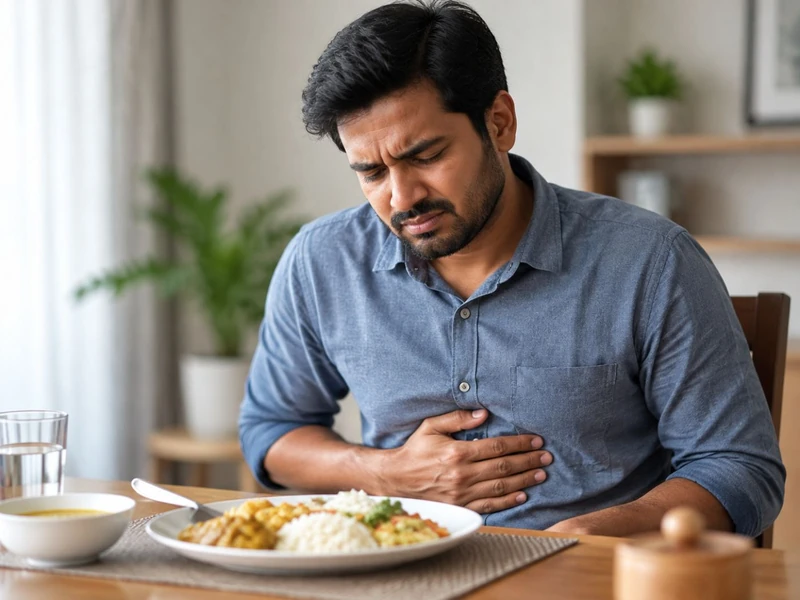
Young man sitting on a sofa holding his upper abdomen in pain
LucknowGallstones · Laparoscopic Surgery

Gallstones Treatment
in Lucknow With
Minimally Invasive
Techniques

Repeated pain after heavy meals may be more than acidity. Get a clear diagnosis and definitive treatment from a surgeon focused on advanced laparoscopic, robotic and minimally invasive abdominal surgery.

What are gallstones?

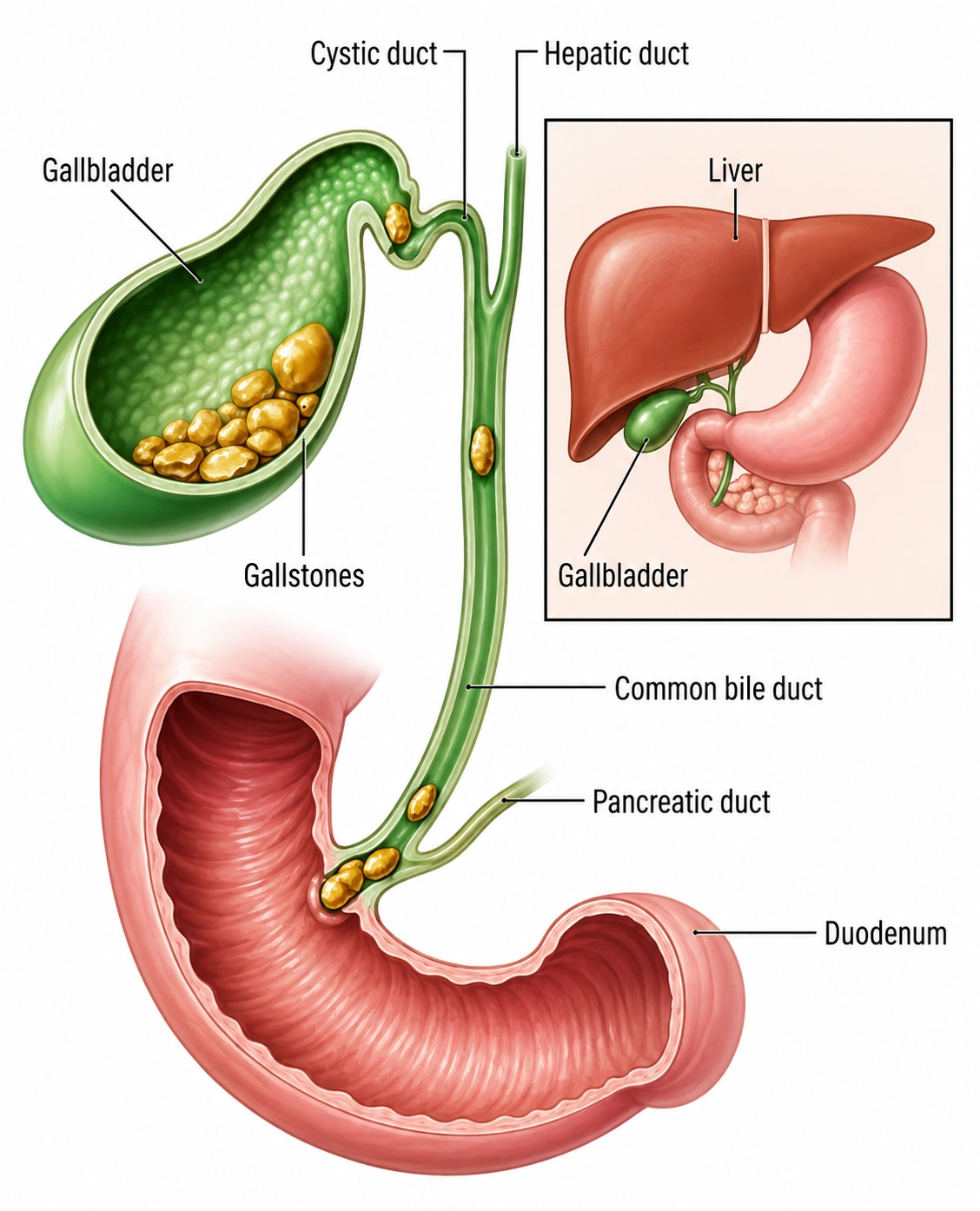
Gallstones are small, hard deposits that form inside the gallbladder.

The gallbladder is a small organ located below the liver. It stores bile, a digestive fluid produced by the liver. After you eat, bile moves through the bile ducts and helps your body digest fats.

Gallstones can form when the components of bile become imbalanced. Some stones remain in the gallbladder and never cause symptoms. Others can block the flow of bile, leading to pain, inflammation, or other complications.

Gallstones do not always require surgery. If they are found incidentally and not causing problems, one may recommend observation rather than surgery. The decision depends on your symptoms, scan findings and clinical situation.

Diagram of a gallbladder with gallstones, cystic duct, hepatic duct, common bile duct, pancreatic duct and duodenum, with an inset of the liver

What symptoms can gallstones cause?

The symptoms can vary from person to person. A typical gallstone attack may cause:
Sudden or persistent pain in the upper right or upper middle abdomen
01
Pain after meals, particularly heavy or fatty meals
02
Pain that may spread towards the back or right shoulder
03
Nausea or vomiting
04
Bloating or indigestion
05
Repeated episodes of abdominal pain
06
Do not keep treating repeated attacks as ordinary acidity without getting the cause checked.
!
Some symptoms need more urgent assessment. Fever, chills, yellowing of the eyes or skin, severe persistent abdominal pain, repeated vomiting or dark urine can indicate a complication such as inflammation or blockage of the bile ducts.

What causes gallstones?

Gallstones develop for several reasons. Common risk factors include:
Being overweight
01
Rapid weight loss
02
A family history of gallstones
03
Gallstones
6 risk factors
Increasing age
04
Certain hormonal and metabolic factors
05
Conditions that affect the composition or flow of bile
06
Having a risk factor does not mean that you will definitely develop gallstones. In many people, there is no single obvious cause.

How are gallstones diagnosed?

✓
I start with your symptoms and medical history.
I then decide which investigations are appropriate.
01

Ultrasound

An abdominal ultrasound is usually the first test used to look for gallstones. It can also provide information about the gallbladder wall, inflammation and the bile ducts.
02

Blood tests

Blood tests may help identify infection, inflammation, or effects on liver function.
03

Additional imaging

If I suspect a stone in the common bile duct or another complication, you may need additional imaging or specialised tests. The exact investigation depends on what I find during the assessment.
The full picture
A scan showing gallstones is only part of the diagnosis.
I review the scan alongside your symptoms and examination findings before recommending treatment.

When do gallstones need surgery?

!
In my clinical practice, I have observed that not every gallstone needs to be removed.

Surgery is commonly considered when gallstones cause repeated or significant symptoms, gallbladder inflammation or other complications. If a stone has moved into the bile duct, the treatment plan may also involve additional procedures.

We do not recommend gallbladder surgery simply because an ultrasound report mentions stones. We first want to understand whether the stones are responsible for your symptoms and whether leaving them untreated creates a meaningful risk.

Not every gallstone needs surgery. Symptomatic gallstones, however, should not be dismissed simply because the pain settles temporarily.

For patients who need surgery, removing the gallbladder is the standard treatment for symptomatic gallstones.

Gallstones Surgery in Lucknow

Laparoscopic cholecystectomy

Laparoscopic cholecystectomy is the most common minimally invasive operation for removing the gallbladder.

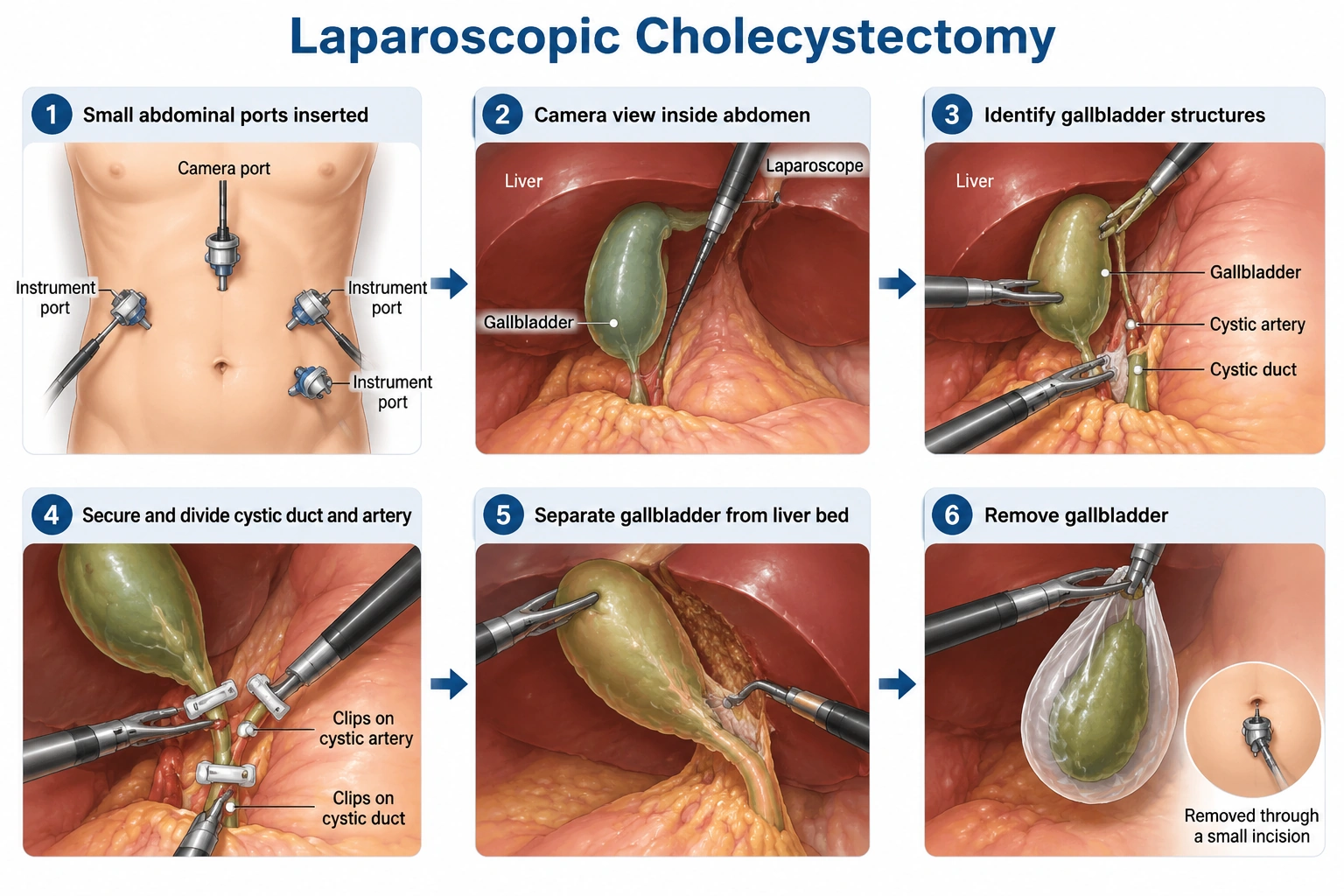
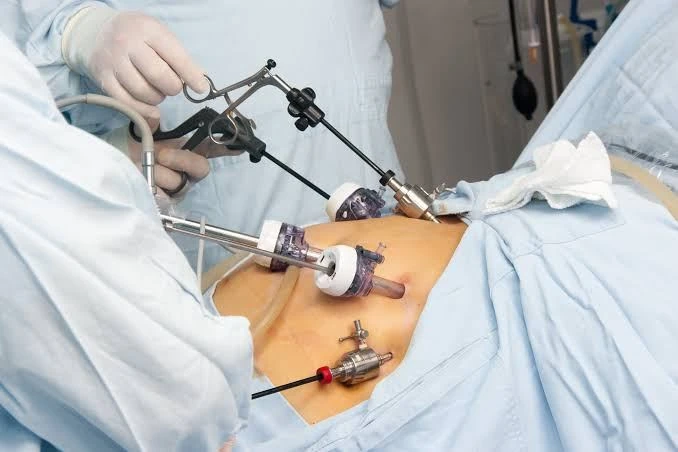
We perform the procedure under general anaesthesia. We make a few small incisions in the abdomen and insert a camera and specialised surgical instruments. The camera provides a magnified view of the surgical area while we carefully separate and remove the gallbladder.

The small incisions are then closed.

Laparoscopic cholecystectomy in six steps: ports inserted, camera view, structures identified, cystic duct and artery clipped, gallbladder separated, gallbladder removed
?
Interesting fact

Why remove the gallbladder instead of just the stones?

Because the gallbladder is usually the place where the problem keeps coming back.
Removing only the stones does not remove the gallbladder’s tendency to form new stones. For people with symptomatic gallstones, laparoscopic gallbladder removal is the standard definitive treatment and helps prevent recurrent attacks.
In short:
Remove the stones,
and they may return.
Remove the gallbladder,
and the source of gallstone formation is removed.
Sources: Society of American Gastrointestinal and Endoscopic Surgeons (SAGES) and NICE.

What happens during gallbladder surgery?

Before surgery, we review your medical history, medicines, investigations and fitness for anaesthesia.
During laparoscopic gallbladder removal:
STEP 01
You receive general anaesthesia and remain asleep during the procedure.
We make small abdominal incisions to introduce the camera and surgical instruments.
STEP 02
STEP 03
We identify the gallbladder and the structures connected to it.
We carefully separate the gallbladder and remove it through one of the small incisions.
STEP 04
STEP 05
We close the incisions after completing the procedure.
In selected cases, additional imaging or procedures may be required if there is concern about stones in the bile duct.
Compared with open surgery, laparoscopic surgery generally involves:
✓Smaller incisions
✓Less postoperative discomfort
✓Smaller scars
✓Earlier mobilisation
✓Faster recovery in suitable patients
Most patients can leave the hospital on the same day or after an overnight stay, depending on their condition, the surgery and the hospital’s recovery protocol.

Can every gallbladder operation be done laparoscopically? No.

But in most of the cases, laparoscopic surgery is done, and there is no need for open surgery.
Minimally invasive

Laparoscopic surgery

  • Laparoscopic surgery is suitable for most patients, but it is not the safest approach in every situation.
  • In most patients, gallbladder removal is performed through laparoscopic surgery.
  • Laparoscopic cholecystectomy is the preferred approach for most gallstone-related surgeries because it uses small incisions and generally allows less postoperative discomfort and a quicker recovery compared with open surgery.
  • For the vast majority of patients, laparoscopic gallbladder surgery is completed successfully without the need for open surgery.
VS
When it is safer

Open surgery

  • Severe inflammation, extensive scarring, previous upper abdominal surgery, difficult anatomy or unexpected findings during the operation can make open surgery safer.
  • If we need to change from a laparoscopic approach to an open operation, that is not a failure of the procedure. The priority is to complete the surgery safely.
  • A small number of patients may need an open approach if it is considered safer. This is uncommon and may be required in situations such as severe inflammation, extensive scarring, difficult anatomy or unexpected findings during surgery.
We discuss the possibility of conversion and other relevant risks before surgery so that you understand the plan rather than being surprised in the operating room.
The priority is always a safe and complete operation. Before surgery, I explain the planned approach and all possible situations so you know what to expect.
Routine Cases. Advanced Capability.

Why surgical expertise matters when a case becomes more complex

A straightforward gallbladder operation and a difficult gallbladder operation can look very different.

Severe inflammation, dense scarring, previous surgery or unusual anatomy can make it more challenging to safely identify and separate critical structures.

This is where a surgeon’s broader experience in advanced laparoscopic, robotic and minimally invasive abdominal surgery becomes relevant.

✓
Dr. Ashish Anand routinely operates such complex cases which get referred to him from in and around lucknow for a higher standard of surgical care.
This comprehensive clinical capability offers a clear benefit: your surgical care is tailored specifically to your clinical situation. Rather than applying a standardized method, the most appropriate, safe, and minimally invasive technique based on your specific presentation is chosen.

After Gallbladder Surgery: What to Expect

What is recovery like after gallbladder surgery?

Recovery differs between patients.

Most patients start feeling like their normal selves within 2-3 days. Almost all patients return to normal daily activities within about a week, although the exact timeline depends on the operation, your general health and the type of work you do. Heavy physical activity may take longer.

We encourage early movement and walking as your condition allows.

After laparoscopic or robotic surgery, you may have some abdominal discomfort, tiredness or shoulder pain for a short period. Shoulder discomfort can occur because gas is used during the laparoscopic procedure.

If you have open surgery, recovery usually takes longer.

We give you specific instructions about eating, activity, medicines, wound care and follow-up before you leave.


Can I live normally without a gallbladder?

Yes.

You can digest food easily without your gallbladder. Your liver continues to produce bile after gallbladder removal. The bile flows directly into the intestine rather than being stored in the gallbladder.

Some people notice temporary changes in bowel habits or difficulty tolerating very fatty foods after surgery. These symptoms usually improve as the body adjusts.

We explain what to eat during the early recovery period and when you can return to your usual diet.

Is gallbladder surgery safe?

Laparoscopic or robotic gallbladder removal is a commonly performed operation, and most patients recover without major problems.

However, no surgery is completely risk-free.

Possible complications include bleeding, infection, bile leakage, injury to the bile duct or nearby organs, blood clots and complications related to anaesthesia. Some patients may also require conversion to open surgery if that is considered safer.

We discuss the relevant risks with you before surgery based on your individual condition.

Checklist7 signs you need a surgical consultation

When should you see a surgeon for gallstones?

You should consider a surgical consultation if you have:
01
Repeated attacks of upper abdominal pain
02
Gallstones found on ultrasound with related symptoms
03
Gallbladder inflammation
04
A history of gallstone-related hospital visits
05
A suspected stone in the bile duct
06
Jaundice associated with gallstones
07
Gallstones causing repeated nausea or vomiting
!
If you develop severe abdominal pain with fever, jaundice or persistent vomiting, seek urgent medical assessment rather than waiting for a routine appointment.
Portrait of Dr. Ashish Anand, general and laparoscopic surgeon in Lucknow
General & Laparoscopic Surgeon · Lucknow

Why choose Dr. Ashish Anand for gallstones treatment in Lucknow?

MBBS
MS
FIAGES
FALS

Dr. Ashish Anand specialises in Robotic, laparoscopic and minimally invasive surgery and has a particular focus on gastrointestinal and abdominal procedures.

His approach is straightforward:

First, confirm the diagnosis. Then decide whether surgery is actually needed. If surgery is needed, choose the safest appropriate technique.

He explains the reason for surgery, what the operation involves, the expected recovery, and the possible risks before you decide.

He has undergone extensive training for expertise in and practice focused on advanced laparoscopic, GI , Robotic and minimal-access surgery.

For patients seeking gallstones treatment in Lucknow, he provides evaluation and surgical care through my practice and hospital affiliations in the city.

Frequently Asked Questions

How long does gallbladder surgery take?

Operating time varies depending on the patient’s anatomy, inflammation, previous surgery, and other factors. A straightforward laparoscopic operation usually does not require a prolonged hospital stay.

Many people with desk-based work can return within a week after uncomplicated laparoscopic surgery. Physical work and heavy lifting may take longer. I will give you advice based on your recovery and the nature of your work.

Some medicines can dissolve certain cholesterol stones in selected situations, but this is not suitable for everyone and stones can recur. Treatments advertised as a way to simply “flush out” gallstones are currently not a reliable substitute for medical treatment.

Once the gallbladder is removed, gallstones cannot form inside the gallbladder because it is no longer present. Stones can, however, exist in the bile ducts in some patients and may require separate treatment.

Yes. Laparoscopic surgery is preferred for most suitable patients, but open surgery may be safer in certain complex cases. The final approach depends on your anatomy, inflammation, previous operations and findings during surgery.

Both robotic and laparoscopic surgery are minimally invasive approaches and can provide excellent results.

For many straightforward gallbladder operations, conventional laparoscopic surgery remains an effective and appropriate option. In selected situations, robotic technology may offer advantages that the surgeon can consider while planning the procedure.

The goal is not to use the most technology—it is to use the most appropriate technique for your individual case.

Some patients can go home the same day, while others stay overnight. I decide this based on your recovery after anaesthesia, pain control, ability to drink fluids and overall condition.

Treatment depends on whether the gallstones are causing symptoms or complications. Asymptomatic gallstones often do not need treatment. When gallstones cause repeated symptoms or complications, gallbladder removal is usually the definitive treatment.

Some pain or discomfort is expected after surgery. Laparoscopic surgery generally causes less postoperative pain than open surgery because it uses much smaller incisions. Pain usually improves over the first few days.

You may find it easier to tolerate smaller, lighter meals during the first few days. Most people gradually return to a normal diet. I will advise you based on how you recover.

Yes. Gallbladder removal can be performed using robotic-assisted surgery in selected patients. Robotic technology gives the surgeon enhanced visualisation and specialised instruments that can assist with precise movements during minimally invasive surgery.

However, not every gallbladder operation requires robotic surgery. The most appropriate approach depends on your individual condition, surgical findings and the complexity of the case.

Gallstones Treatment in Lucknow with Dr. Ashish Anand

Persistent gallstone pain is not something you need to keep managing with temporary medicines and dietary restrictions.

If your gallstones are causing symptoms, the next step is to understand why they are happening, whether they need treatment, and which surgical approach is right for you.

We assess your condition and explain your treatment options clearly, including whether gallbladder surgery is necessary.

Book a consultation with Dr. Ashish Anand for gallstones treatment and gallstones surgery in Lucknow.

+91 89330 60606
Call now
Dr Ashish Anand
MBBS, MS, FIAGES, FALS
Lucknow
General & Laparoscopic Surgeon

Book a Consultation

Not sure if you need surgery? Let's talk first.
Share a few details and our team will call you back within one working day to fix a time with Dr. Ashish Anand.
  • 15+ years · 20,000+ surgeries
  • Honest advice — surgery only when needed
  • HLC South City & Max Gomti Nagar, Lucknow
Request a callback
Takes less than a minute.